Friday, August 27, 2021

CSA Newsletter #12 - August 28, 2021


Beans are back!

While returning to the bean patch, a story comes to mind from earlier days. When we were first learning how to garden at the farm, it was often a surprise when something we planted actually grew! The farm was very primitive, with growing plots carved out of a wild area that had not been cultivated for decades. One of our origin stories is about the extension agent that we invited to the farm to advise us on best use of the land. He took one look at the tilted terrain, the copious rocks protruding from the soil, the masses of brambles and weeds dotting the proposed garden space, and he offered a single-word answer for the best land use: Recreation!

So of course we commenced to garden. 

The first bean planting was rather ambitious and we were excited to see the many rows of emerging seedlings that eventually matured into little leafy bushes. And then one day we looked and realized: We've got beans! There was excitement and almost giddy laughter as we waded into our first big harvest - taking along a couple of farm visitors who didn't want to miss out on the apparent fun. We happily chatted as we started to pick. And pick. And pick. And as many of you know, the beans are not all evenly mature on each plant, so picking a large patch of beans means thousands of decisions - is this bean big enough? too big? too crooked to ever mature? It takes focus, as well as the ability to bend over for an extended time period.

Decisions

It got quieter in the bean patch. The visitors peeled off, muttering, "That's enough of that!" And we learned our first lesson about market gardening. We weren't in a backyard garden anymore!

Fast forward a few decades. It's still quiet in the bean patch. But the crew, experienced in the ways of bean picking, comes with earbuds or headphones for a musical, podcast, or books-on-tape accompaniment to what they know will be a long stretch.

Sam with headphones, tuning in to Books on Tape to Pick Beans By
(Watership Down)

The virtual accompaniment might also help to distract from the discomfort of extended bending. No getting around it - bean plants are low to the ground and there are a lot of them. Over time, we develop our favorite styles to protect and support our "bean backs". 

r. to l. - Sam in the "bean bend," Kenny in the "bean crouch," Cale in a "crouch-bend"!

Those of us who are not wired for bean-picking spend our picking time ruminating on the meaning of beans in our society. More specifically, what is the origin of the idiom, "a hill of beans" as in the saying: "That doesn't amount to a hill of beans". Why has that come to depict something with little value? Why don't people think much of beans? 

A Google search supplies this rather bland suggestion: “Hill of beans” is cited from 1853 and 1856. Beans were planted between corn; perhaps corn had a much better market value in the 1850s. Here is a better idea: Beans, being fairly easy to grow, are commonly used in everyday expressions to indicate something of little value. Consequently, someone who isn't worth a hill of beans is seen as being worth very little, although one could argue that today a hill of beans costs a pretty penny.

Since "a hill" in the US is 99 feet (before it becomes a mountain), that would definitely be a lot of beans! But why are beans so undervalued? They might be "fairly easy to grow", but they aren't fairly easy to pick! Our neighbor who picked beans on his uncle's farm tells us that in 1963-64 he was paid sixty cents for one of those old-fashioned hampers full of beans. 

A dime plus a fifty cent piece for this bushel of beans!

Well, times have changed and hopefully our crew (and our beans) do not feel undervalued! However, do you think it was mean that right after picking beans this week, we asked the crew to thin the next patch of beans! Yep, one more patch to go before frost takes the tender bean plants.

The crew thinning the plants in the next patch on, literally, a hill of beans!

Although Freya looks like she is walking on the row of bean plants, she is an impeccably trained dog 😂 and, this time, is only walking on the extra plants that have been pulled and discarded for being too close together. Smart doggo!

And of course modern-day technological ingenuity has solved the "problem" of picking beans. In commercial bean fields, giant semi-sized tractors, tricked out with special bean harvesting attachments, crawl through thousands of acres, grinding all the bean plants in their path. A system of conveyor belts and blowers separates the beans from the leaves while dump trucks follow the harvesters to receive the massive load of beans. It is definitely not quiet in the bean field while these behemoths do their work. But 1-2 bushels of beans are harvested every minute! That's a lot of dimes and fifty cent pieces, but at what cost? At what cost?


Well, beans don't always carry negative connotations- an energetic person is "full of beans". And what of Jack's magic beans that allowed him to grow a beanstalk up to the sky? Those were pretty valuable beans! We hope you will appreciate the GREEN (and maybe yellow) BEANS that are definitely in your share!

We made a three bean salad this week - to stay away from the stove and to appreciate beans! We substituted blanched green beans for one of the the dry beans in the recipe. We used parsley but skipped the rosemary and celery. SWEET BANANA PEPPERS added some crunch, and they are also in your share. Soaking the chopped ONION was a helpful tip for taking the bite out of the onion. It was good!

We also made a sesame noodle salad (too hot to cook!). We did cook regular pasta for the base and then added the veggies we had available: grated CARROTS and lightly steamed SUMMER SQUASH slices. It's really all in the sauce, folks!

If it stays hot, we're going to look into POTATO salad And we know that ribboned and lightly massaged KALE happily go into any of these salads. GARLIC does, as well, and if you aren't saving your TOMATOES for tomato sandwiches, they would be a fine addition to the bean salad - as well as some of the THYME or OREGANO. We don't know which bunch you'll get, but these are friendly herbs that pair with many dishes, and can be easily dried for later use.

That's our best guess on the share this week; there may be some substitutions or surprises, but we do know that it all will amount to way more than a hill of beans!

Original art by Sheila Ruen, gifted to the farm over thirty years ago.

Have a great week everyone!


Thursday, August 19, 2021

CSA Newsletter #11 - August 21, 2021

Sunset clouds over the woodpile


We are rounding the corner into late summer and your share reflects the imminent change of seasons, while still being firmly ensconced in warm weather fare.

SUMMER SQUASH continues to serve, especially the variety, Zephyr, which we particularly favor. It isn't easy dipping the ends in food-grade green wax every night, but the results are so pretty! And the squash is a favorite for its mild, sweet flavor, creamy texture, AND ease of preparation. CARROTS stay with us through summer and fall. We are starting to pick a new patch and you will probably notice the difference in size and more regular shape. Same good flavor! TOMATOES make a slight showing. We are working through our first crop that has been disappointing. We are not disappointed in the tomatoes - it's not really their fault. But early heat, or perhaps poor timing on our part, has conspired to make a very short crop. We are hopeful for the second patch, which we will start harvesting in a week or so.

  POTATOES, LEEKS AND GARLIC call out for a soup; the nights are cool and soup sounds good! CABBAGE is new to the share and there are many ways to use this trusty vegetable - from slaw to soup. It will keep a good while in plastic in the fridge if you can't use it all at once. ARUGULA is also new to the share this week - the unique peppery flavor pairs well with beets and feta (sorry no beets in the share this week!) If Arugula stumps you, try these 31 suggestions for awesome ways to enjoy arugula. Arugula gimlet, anyone? (read the comments for inspiration). 

Although this is a new patch of arugula, the flea beetles got there first! These pesky little leafhoppers are usually a spring challenge, but it's a topsy-turvy year and we have fall flea beetles. Some of the leaves are a bit "holey" but the flavor is not affected at all.

You might be more familiar with "baby arugula" which is what you often see in stores. There are no holes in baby arugula, but also not as much flavor. We prefer to grow our arugula to full size and full flavor.
 Arugula is also called "Roquette" in France and "Rocket" in the U.K. We think you'll blast off with our arugula!🚀 🥗

And finally, again, CURLY KALE. Here are two Kale Salad recipes from the NYT - both look intriguing and a way to jazz up your kale consumption. Lemon-Garlic Kale Salad and Kale Salad with Apples and Cheddar. Remember to slice your kale leaves into ribbons and massage lightly for better digestion and dressing absorption! And if you read the comments for the Kale/Apple Salad you'll see that there is pushback for the seemingly inordinate amount of oil in the dressing. The recipe does say to use half the dressing at first and then see if you need more. Or you could just make half the recipe or substitute your own favorite!

There are four farm vehicles in this photo (and one moon), parked at the barn as we work late - the days are getting longer and shorter!


Have a great week everyone!


Friday, August 6, 2021

CSA Newsletter #9 - August 7, 2021

King Bros. planting lettuce

Late summer - the time of the season when we meet ourselves coming and going! 

COMING: This week we planted 2000 lettuce transplants and almost 1000 broccoli, kohlrabi, and cabbage seedlings. Hopefully the fruits of this labor will show up in your late September/early October shares!

In "the slope" garden, Billy "drops" the cole transplants at the proper distance. Folks come behind to "set".


The same patch (with a different crop) looked like this in early April!


And like this in May!


Cale and Ashleh planted most of the lettuces in the "bowl garden". And yes, the shutter clicked just as the doggos took an unauthorized shortcut!

GOING: Harvest harvest harvest! This week we started the onion harvest.

Sweet Spanish onions are the first variety we pulled

Harvesting onions is really quite satisfying. The small root system makes them easy to pull and they come out of the ground with a pleasing "pop". The greens make for easy handles, and a faint onion aroma wafts through the air, bringing a reminder of all the tasty dishes to come!

Sweet Spanish - preferred onion for putting a big slice on your choice of burger!


Ton-yuns of onions! And more to come..

We'll be curing the onions in the pole barn where the garlic is hanging - we're certain they will get along famously.

And they'll also get along in your share, as well as in your frying pan! Here's what's in the box this week:

SWEET SPANISH ONION: freshly dug! Refrigerate what you don't use right away.

GARLIC: pretty well cured; you could still refrigerate, but not necessary.

COLLARDS: round, flat nutritious greens. See CSA Newsletter #6 for lots of Collards info and ideas. AND CSA member, Jackie C., shared this recipe for Quick Collard Greens, also with more info and ideas along with a quick and tasty Collards prep method.

AND you can probably apply those recipes and tips to the bunch of CURLY KALE in your share. Now if you're thinking, hmmm, more kale??? try making potato and kale cakes (google a recipe - the one we linked to is no longer available), using four items in your share, and turn these humble ingredients into a feast! 

And you can use the POTATOES in your share for the potato cakes OR for this classic recipe for "Mom's Potato Salad."
(The previous two recipes, and the next one,  courtesy of Shiloh, co-owner of Tumbling Shoals Farm in North Carolina, and daughter of Frog Holler Farm CSA members! Thanks, Shiloh!)

The ZUCCHINI/SUMMER SQUASH and the CARROTS in your share will combine nicely in this veggie combo of Herb Roasted Zucchini and Carrots. Be sure to slice the carrots small enough so that they cook evenly with the more tender zucchini. 

While you're in the mood for roasting, you can try the Lo-Mein noodle salad we had this week. 

Cooked on the outside griddle so the kitchen stayed cool. We made a lot!
 
This dish can use many of the veggies in your share. In this case we used summer squash, carrots, pac choi, garlic, and green beans - oh, and some broccoli we gleaned from the last patch. The veggies can change with what's available. We actually cooked the veggies on the griddle, but they can easily be roasted in the oven. We used a combo of Sunflower Oil and Toasted Sesame Oil (important!). After cooking the noodles we added them to the grilled veggies. (You could do this in a pan on the stove.) We then added Lo-Mein sauce, mixing and stirring until the flavors were blended. 

So the Lo-Mein Sauce is the secret ingredient, and here lucky readers, is the recipe - thanks to Donya, our farm cook.

1/2 c. soy sauce                                         
1/2 c. water                                                
1/4 c. sugar
1/4 t. onion powder                                                                                                                
2 dashes of salt
1 T. corn starch

Whisk all ingredients together in a sauce pan and bring to a boil. When thickened, remove from heat, let cool slightly, then mix into noodles and veggies.

We had the Lo-Mein with a Sweet and Sour Cucumber Salad. Very nice, and you do have CUCUMBERS in your share again! This will probably be the last time, so enjoy - and save extras in a plastic or veggie keeper bag in your fridge. If you don't enclose the cukes in some sort of airtight container, they will become soft in the fridge - still usable, but, well, soft.

And finally, GREEN PEPPERS return to your share. We have a short crop this year so there won't be many in the future weeks. If you can't use these fresh, peppers are super to easy to freeze - simply cut into preferred pieces and spread out on a cookie tray. Place in the freezer and once frozen, bag them up. Or you could cook them up with this recipe for a Roasted Squash and Pepper Tart, compliments of CSA member Jackie C. (We love to hear how you are using the veggies in your share!) Jackie says she has made this recipe many times over the years and it's good hot or cold. Thanks Jackie!

And, when time is short or we're tired or it's hot, or all of the above, we go the minimalist route: slices of fresh raw veggies, maybe a little cheese or hummus, some good dense bread. We let the veggies shine in their fresh simplicity. Because really, folks, that's what it's all about. From a tiny seed, nourished by soil and water, plants magically emerge in a myriad of form and foliage, fruits arrive in the completion of the growing cycle, farmers harvest and bring them to market, or gardeners pluck and bring them to the kitchen. And we come to the table. Ahhh - it's summer and Nature is bountiful!

CSA member (and artist) Dorothyann sent this photo of a beautiful lunch, composed of veggies from her porch garden. A treat to see - and to eat!


Our peaceable kingdom - Freya, Gus and some of the ladies


Have a great week everyone!

Thursday, July 29, 2021

Newsletter #8 - July 31, 2021


Potato digging time! Cale on the digging fork while Edwin and Morgan retrieve these red beauties.

As we move through mid-summer and beyond, it seems like there is always something new to harvest. Some harvests continue throughout the season and some crops need to be harvested all at once. When it's time to harvest potatoes, you best be at it, as they will deteriorate if they stay in the fields. And in our case, we will have to share more and more of the tasty spuds with whatever little critters are taking nibbles. Potatoes are a humble and familiar vegetable, but there is definitely a process to get them from the ground to your table!

Potatoes grow underground, with several spuds spreading out from the mother plant, just beneath the soil's surface. We loosen the soil with digging forks, and then it's basically a treasure hunt. We can't see the potatoes, so it's a matter of combing through the soil by hand until we can feel the lumps that signal a find. After we think we have located every spud from that plant, we move on down the row, digging, searching and sifting until our tubs are full. But that's not all!


As you see, potatoes come from the ground and are covered with dirt. The next step is to wash each spud. You can see Kenny King at our newly improvised washing station.

Kali oversees as Billy and Donya wash.

To farm on a small-scale is to improvise. This year, in a grand improvement, Billy hooked up this multiple spigot sprayer, with the ladder providing overhead hose support. Bungees always come in handy.

Closeup of the nifty setup

After the potatoes are washed, that's still not all! In order to store without refrigeration, the potatoes must be dried.

Potatoes on our improvised drying racks: ladders with legs added and screen stretched across. Also, if you look closely at this photo, you will see something that is more couch potato than spud!

When the potatoes are thoroughly dry, they are boxed up and stored, ready for market and your shares. Thanks to all the diggers, washers and dryers - and supervisor Kali - who helped to bring in this harvest!

So do you think you have POTATOES IN YOUR SHARE this week? Yes, you do! Red or white and freshly dug! This week we roasted, boiled and fried potatoes to see which we liked better: all good!

Also, our faithful friend, CURLY KALE.

Another faithful friend for a while: ZUCCHINI AND/OR SUMMER SQUASH.

And CUCUMBERS - in great numbers! Cukes do store well if you still have some in your fridge from last week. Just keep them in a plastic bag or veggie keeper bag. Or you can make this recipe for Tzakziki, recommended by crew members, Ashleh and Cale. A refreshing cucumber-based sauce for dipping and spreading on just about anything.

OR you can do what we did a lot this week: make hummus (here's an easy hummus recipe), slice cucumber spears and carrot sticks, dip and munch away!

Because you do have CARROTS in your share!

Carrots arriving under all those greens


Along with GREEN OR YELLOW BEANS.

PAC CHOI returns for an easy stir-fry, quick-cooking green. 

And finally, GARLIC - it is still drying but may be cured enough to store out of the fridge. Refrigerate if you aren't sure. Or cook it up!

And finally, The Crazy Wisdom Bookstore and Journal ran a nice feature on the King Family and Frog Holler Farm. It has been in print since April but they also just added a digital option. If you check it out, be sure to click on the musical collaboration with Frog Holler farmer, Billy King, and featured musician, Emily Slomovits on p. 3. Their cover of Joni Mitchell's Both Sides Now will warm your heart!

Here's the link: https://crazywisdomjournal.squarespace.com/weekly-62


A peck of Kali

Have a great week everyone!


Thursday, July 22, 2021

Newsletter #7 - July 24, 2021


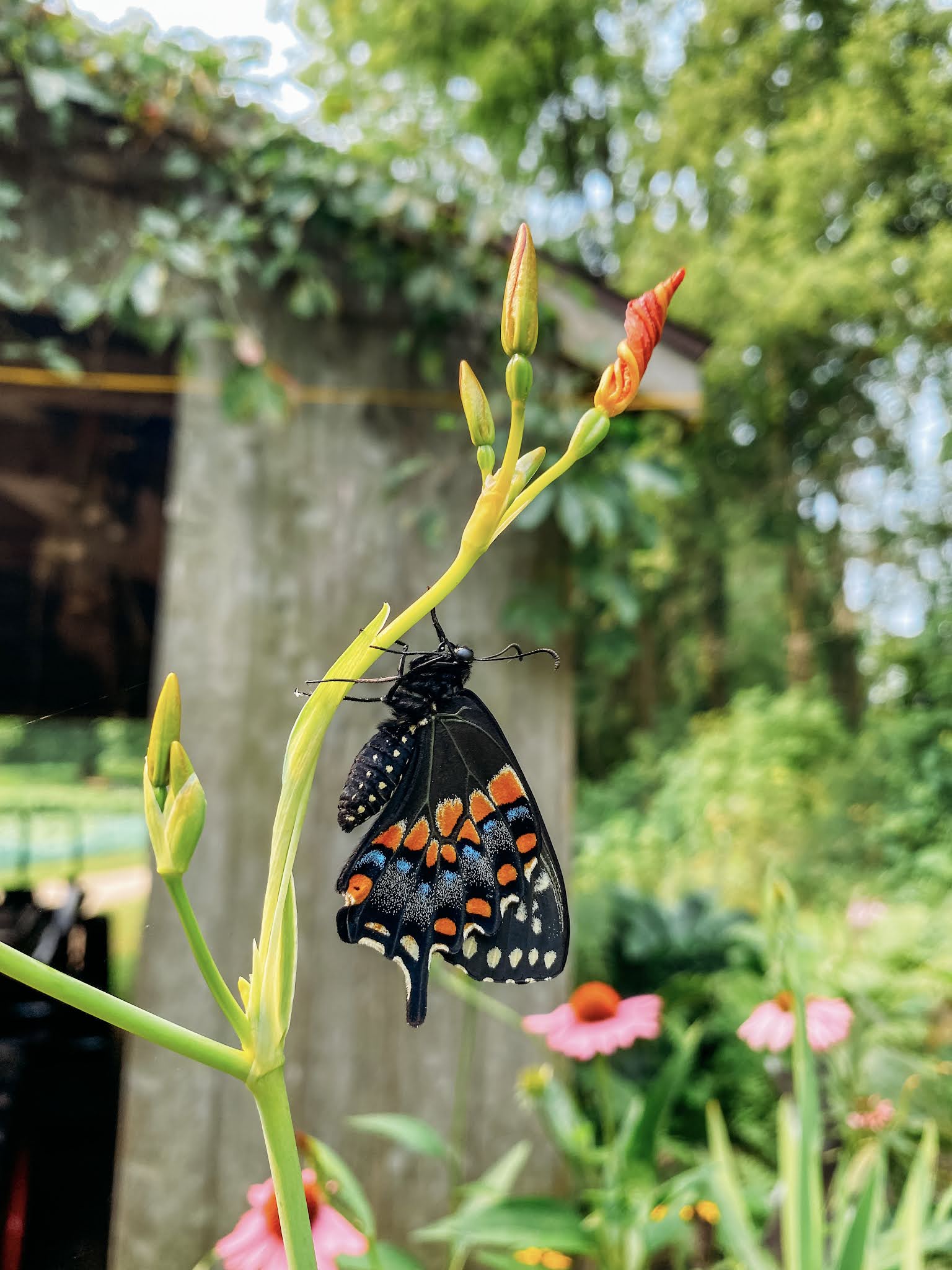
Black Swallowtail butterfly just hatched at the farm thanks to efforts of Donya

Last week our newsletter focus was on weeding - which was also our farm focus. Weeding isn't over but this week we will focus on harvest. So, here's WHAT'S IN YOUR BOX:

BEANS - GREEN OR YELLOW

Harvesting the beans


The beans!

KALE - LACINATO/TUSCAN/DINOSAUR - many names, same variety. Dark crinkled leaves, good for stir-fry or Kale Salad. (Be sure to massage your kale!)

Harvesting Kale 


Bunching Tuscan Kale

ZUCCHINI (GREEN)/ SUMMER SQUASH (YELLOW)

Harvesting zucchini


Zucchini and summer squash - picked and packed

CUCUMBERS -  NEW!

Edwin starts picking cucumbers


The cucumbers! (Actually pickling cukes - which are also excellent for fresh eating)


CARROTS

Digging carrots


Bunching carrots

HERB BUNCH - EITHER THYME, OREGANO OR SAGE


l. to r. Thyme, Oregano, Sage

MAYBE: PAC CHOI (ASIAN GREENS)

Kalisi approved

MAYBE: BEETS
Maybe without the greens

STORAGE:
Most veggies like a quick dunk, drain, and being stored in a plastic or veggie-keeper bag. Remove greens from carrots for storage. The herbs can be refrigerated for a bit and also dry easily - hang upside down out of direct sunlight.

THYME: a versatile herb that goes with many veggies and soups. Especially nice with carrots; a zucchini stir-fry would also take nicely to thyme.
OREGANO: has a significant place in Italian and Mexican dishes. You could try steaming or sautéing green or yellow beans and adding oregano and a marinara sauce.
SAGE: often associated with poultry and turkey stuffing, try these Savory Herb Biscuits for a delicious pre-holiday use for sage. 

We don't know which bunch you will get; explore and enjoy!

ZUCCHINI BOATS: Looking for ways to enliven your zucchini preparation? Try one of these versions of Zucchini Boats: traditional or vegan. Usually a kid favorite as well. At the farm, when cooking time is often limited, we adopt the jet-ski version of zucchini boats: Slice zucchini in half, cover halves with cheese of choice and maybe a sprinkle of garlic powder or salt, bake until zucchini is tender and cheese is browned. Works best with medium to small zucchini or summer squash.

FARM NOTES: As you can probably see from the photos, harvesting is a hats on, heads down sort of affair. Since we haven't yet figured out how to sit in easy chairs and have the plants come to us, we will continue to bend our backs and bow to the bounty. Thanks to the hard working crew under those hats - we'll get them to face the camera in future newsletters! :-)

Hope you enjoy this mid-summer box!

Freya says, "Have a great week everyone!"


Friday, July 16, 2021

CSA Newsletter #6 - July 17, 2021

Kalisi hitches a ride as Billy starts to address a very weedy field

We had one dry day this week when we could approach some fields that have been weedy but too wet. Most of the cultivation at Frog Holler is done by hand, by inclination and incline. Inclination: Working with hand tools gives us a chance to see closely how the plants are doing, plus hand tools offer more precision and an ability to clean up close to the plants. Incline: Located in the "Irish Hills" of southeast Michigan, there is very little flat ground on the farm. Tractor cultivation does best with big fields (we have smaller "patches" due to the uneven terrain) and flat ground, so the tractor doesn't inadvertently slip and start taking out the veggies instead of the weeds!

Hence, we crawl and cultivate, and kitties join us, in their unapologetically opportunistic ways!

So satisfying when it's done!

WHAT'S IN YOUR SHARE:

A super healthy helping of KALE (frilly leaves) and COLLARDS (flat round leaves)! These two hardy greens are related – both are technically a variety of cabbage in the species Brassica oleracea. As a result, both greens are very nutritious and rich in vitamins A, B, E and K. Collards are lower in calories and high in fiber and protein, while kale contains more iron.

CARROTS - Vitamin A! Along with beta-carotene, fiber and Vitamin K. Plus yummy crunch.

ZUCCHINI/SUMMER SQUASH - low in calories, fat and sugar. High in folate (a B-vitamin). And happy to get along with just about any herb or seasoning you prefer!

GREEN PEPPERS - NEW! - low in calories and loaded with good nutrition. All varieties are excellent sources of vitamins A and C, potassium, folic acid, and fiber.

FRESH GARLIC  - Garlic is low in calories and rich in vitamin C, vitamin B6 and manganese. It also contains trace amounts of various other nutrients.

PARSLEY - either flat or curly. Parsley is an excellent source of vitamin K and vitamin C, and a good source of vitamin A (mostly in the form of beta-carotene), folate (vitamin B9), and iron. So much more than a garnish!

POSSIBLY: GREEN BEANS AND/OR CUCUMBERS We're just starting to harvest the patches and will see how much we get. If not this week, soon!

A NOTE ABOUT COLLARDS: A question that has circulated in foodie circles for some time is:
It's a catchy title, and perhaps a helpful reminder that Collards, long relegated to the two-hour boil with a ham hock stock pot , are just as nutritious and versatile as their trendy cousin Kale. The linked article will provide several helpful recipes, including the use of Collards as a wrap for bean burritos or veggies. We served Collard Wraps at our music festival one year to many favorable comments.

Twenty-one different heirloom varieties of collards!

You can also learn a lot about collards from this extensive Collards primer: how to cook collard greens (101). Many interesting approaches in this article, including Collard Greens Slaw with Feta.  It's a far cry from the two-hour boiled ham hock, although that traditional recipe remains firmly in the Collards Canon. At the farm, we usually braise collard greens - first sautéing garlic and onions, adding the rinsed and chopped collard greens, and then simmering in soup stock until tender. 

Hopefully you'll enjoy all the Superfoods in this week's share - have a great week everyone!

Chickens chillin' on a picnic table: A chick-nic?


Friday, July 9, 2021

CSA Newsletter #5 - July 10, 2021


Morgan, Edwin and Cale on the digging line with some fruits of their labor in the foreground.

Garlic digging week! A yearly tradition at the farm, and despite being hot and steamy, the garlic showed us that it was time to dig. Digging too early doesn't give the garlic bulbs enough time to fully develop. Digging too late and the bulbs might stat to deteriorate in the moist ground. This week, with temps unfortunately in the nineties, the time was just right! But first....

WHAT'S IN YOUR BOX: 

CARROTS 

CURLY KALE: There are some excellent tips for Kale Chips in last week's newsletter.

ZUCCHINI - NEW! The arrival of zucchini means summer is in full swing. And although zucchini's relentless productivity is the butt of many jokes, especially by summer's end, we pick the fruits when they are young and tender and always enjoy a quick stir-fry. There will be green and/or yellow squash in your box.

YOUNG NAPA - NEW! These Asian greens are on their way to becoming the large bulbous vegetables you may be familiar with. But we plant Napa thickly so we can thin the patch early and enjoy the greens and the mildly spicy flavor long before the plants make their big heads. Use in any stir-fry.

SCALLIONS: This is the end of the scallions for this year, so the greens aren't so purty. We will miss their unique mild onion flavor, but look forward to the bulb onions that are not too far in the future.

HERB: Hasn't been harvested yet but most likely basil or parsley - you will know!

GARLIC: This is fresh-picked garlic so it has not gone through the drying process and is not meant to store. Use it up or keep in the fridge.

To learn how this humble bulb made it into your share box, read on for the Garlic's Journey! Since this adventure happens every year, we went back to past years' posts for some background and more photos:

NOTES FROM THE FARM: the week of the "stinking rose'! (July 11, 2020)

Garlic has been called the stinking rose for nearly a century, thanks to a French writer and physician, Henri Leclerc, who in 1918 roughly translated garlic’s ancient Greek name, scorodon, to skaion rodon, and then to rose puante, or stinking rose. *

Although garlic is in the Lily family (along with tulips and, of course, lilies), roses are not in the Lily family. But the "stinking rose" nickname has been affectionately embraced by garlic lovers; there is even  a popular California restaurant named "The Stinking Rose" and renowned for including garlic in every dish. (now temporarily closed )

Garlic, like many garden crops, requires patience and delayed gratification. We plan and we plant; we weed and we wait. Garlic, however, might win the delayed gratification prize, requiring planting in the year before harvest!

Planting garlic in the fall is often the last field task of the season - Ashleh, Cale, Kirk, King Bros.photo from 2019.

After the single garlic cloves are planted one-by-one in the rows, the entire patch is covered with straw, to deter the cloves from premature sprouting in the fall. The garlic stays snug under the straw throughout the winter and then, when the weather and ground are warm enough in the spring, each clove starts to send up a green shoot. 

When the cloves sprout, the straw is removed from the rows so the garlic can get a good growing start. A spring weeding is usually in order at this point. Then, when the plants reach a certain maturity, they start to make the "garlic scapes" that have been in your shares. We remove each scape so that the growing energy goes into making good bulbs, rather than going into the seedheads that the scapes represent.

Garlic scape with froggy friend - photo/2011

Once all the scapes have been harvested and the garlic bulbs have reached their full size, the green tips start to brown and we know it is time to dig.

Mia bringing in an armload of garlic on digging day - photo/2013 


Ashleh and Cale on the digging line - 2020

After the entire patch has been dug, the piles of garlic - bulbs with strong stems attached - are sorted into bundles that can be hung for air-drying.

Needing to be bundled - 2010

A bundling party - 2010 (l. to r. - Jenny, Chrissy, Angie, Julien, Dorothy,  Kat)

Then the bundles need to be hung for quick and thorough drying so that the dried bulbs will store.

After the last bundle was hung - Edwin, Nhin, Stevie, Tacy - 2015


Bundling in our new pole barn - no junk yet! Kathryn, Nhin, Kim, Paul - 2014
 
More bundling - Mason, Marc, Nhin (his third and final garlic bundling) - 2016

Bundling in the pole barn - now with lots of storage/junk! Cale, Milan, Ashleh - 2020

Completing the hanging of the bundles - Cale and Keegen, 2020


All this eventually leads to the garlic in your share:

One bulb - many hands!


We hope this little photo essay gives you an idea of the many stages involved in growing garlic, and the many crew members, present and over the years, who have been willing to offer their time and hands to this process. We certainly appreciate their good-natured help! 

By joining a CSA, not only do you get a "box of produce", you also have an opportunity to connect more closely to the cycle of the growing season, to acknowledge (for better or worse) the vagaries of Mother Nature, and to appreciate the many hands that help create the story of each item in your box!

Have a good week everyone and thanks for bringing your boxes back!

Cale, digging with the rising sun to beat the heat (but not the bugs!)